Bitcoin · AI · Education · Media

21 Real Stories. 21 People.
One Sound Money Revolution.

Real stories from people around the world whose lives were changed by Bitcoin — not through investing, but through necessity, survival, and transformation.

Scroll
How to Start

Four Ways to Begin

Wherever you are on your journey, there’s a clear place to begin.

01
Read Stories
Real people, real turning points, real Bitcoin.
02
Watch Films
The fastest way to understand why Bitcoin matters.
03
Learn Bitcoin
No jargon. No charts. Just clear, simple answers.
04
Bitcoin for Business
What a 10% allocation could have done to your balance sheet.
21
Years of Editions Planned
15+
Domains & Ventures
10yr
Wall Street Experience
Stories Left to Tell
The Mission

Educate the Masses on Sound Money

For the first time in history, humanity has access to a form of money that cannot be seized, debased, or manipulated. Bitcoin represents a once-in-a-generation innovation — and most people don’t know it yet.

Bitcoin Strategy Group exists to change that. From high-end executive consulting and corporate treasury strategy to children’s storybooks and graphic novels — we meet every audience exactly where they are.

The goal is simple: separate money from the state, and give every person on earth access to sound money — one conversation, one book, one story at a time.

Books & Media
Anchored by our flagship book This Is Why We Bitcoin — real stories of lives changed by sound money, told through premium hardcovers, graphic novels, magazines, and newsletters.
Education & Thought Leadership
Explore the Learn section for clear, approachable resources on Bitcoin and sound money — from children’s financial literacy to everyday guides that make complex ideas accessible to all.
What We’re Building

Three Ways We Tell
the Bitcoin Story

Every medium reaches a different audience. Every story opens a new door.

01
This Is Why We Bitcoin
21 real stories from people around the world who turned to Bitcoin out of necessity. A premium hardcover. The book that introduces Bitcoin to everyone else. thisiswhywebitcoin.com
02
Collectible Series · 21 Volumes
The Saylor Series
A definitive 21-volume library edition collection distilling Michael Saylor’s most important frameworks on Bitcoin and the future of finance. thesaylorseries.com
03
Graphic Novel · For All Ages
The Bitcoin Comic Book
Financial literacy through illustrated adventure. Characters and stories that explain money, inflation, and Bitcoin — for kids and adults alike. thebitcoincomicbook.com
Get In Touch

Ready to Get Off Zero?

Whether you’re an individual, a business, or an organization — the first step is a conversation. Reach out directly or fill out the form below and Tyler will get back to you personally.

[email protected]
Tyler Tabit
Founder & Principal
The Founder

Tyler Tabit

Founder, This Is Why We Bitcoin · San Luis Obispo, CA

After graduating from the University of Notre Dame, Tyler began his career at Groupon during its pre-IPO, hyper-growth years. He later spent nearly a decade as an Investment Advisor at Merrill Lynch, advising high-net-worth families and organizations across hundreds of millions in assets — before earning his Executive MBA from UCLA Anderson.

Over time, Tyler concluded that his personal values no longer aligned with those of the large banking institutions or the broader financial system — one that disproportionately benefits a small percentage of participants while the majority bear the long-term effects of inflation and currency debasement.

Tyler relocated to San Luis Obispo and founded Bitcoin Strategy Group — a media and consulting company at the intersection of Bitcoin, AI, and storytelling. Through physical content, digital content, and advisory services, Bitcoin Strategy Group’s mission is to get as many individuals and organizations “off of zero” Bitcoin.

Tyler lives in San Luis Obispo with his wife, Caitlin, and their two dogs, Gordy and Bodhi.

University of Notre Dame, 2010
Political Science & International Business
UCLA Anderson School of Management
Executive MBA, 2023
Groupon
Pre-IPO, hyper-growth years
Merrill Lynch / Bank of America
~10 years · Financial Advisor · High-net-worth wealth management
LinkedIn X  @ThisiswhyweBTC
“Bitcoin and AI Saved My Life”

Most of Us Don’t Arrive at Bitcoin Through Comfort

“Most of us do not arrive at Bitcoin through comfort. We arrive through pain, disillusionment, struggle, and eventually clarity.”

— Tyler Tabit

Tyler first discovered Bitcoin in 2012. But he did not truly understand it until 2023 — after his life completely fell apart.

From the outside, he looked successful. A degree from Notre Dame, an Executive MBA from UCLA, a career at a major bank helping manage millions of dollars, living in Santa Monica — spending a decade helping the top 1% get wealthier. But behind the scenes, he was suffering.

100+
Times Under Anesthesia
50+
Top Doctors Consulted
10yr
Of Severe Back Pain

More than 100 times under anesthesia. Multiple spinal fusions. A full lumbar laminectomy. Dozens of stem cell treatments, radio frequency ablations, nerve blocks. 50+ of LA’s top doctors. 200+ prescription medications. And only getting worse.

He was living in what felt like the matrix — trusting elite institutions, elite doctors, and a system that looked impressive from the outside but was deeply broken underneath. When doctors were debating another fusion, a morphine pump, a fentanyl patch, or a spinal cord stimulator, AI cut through the noise and gave a simple answer:

“You have advanced Degenerative Disc Disease, and there is a simple way to manage this. Get a total disc replacement, then walk. Walk as much as you possibly can.”

That clarity changed everything.

Ten years. Nearly $1M spent on medical care. $28M charged to insurance. And it took AI 10 minutes to explain clearly what was happening and what needed to be done. My experience taught me something unexpected. The same institutions I’d trusted to guide my health had failed me. That realization made me question other systems I’d taken for granted, including money.

After the disc replacement, Tyler and AI turned to finances — and arrived at a simple framework: two assets only. Cash and Bitcoin. Cash for short-term bills. Bitcoin as a savings account — to hold, grow, and build upon forever.

21,000
Steps walked every single day for the past three years — living proof that the body heals when given the right information, and that AI delivered what a broken medical system could not.

Following the surgery, Tyler began rebuilding his life and business around AI and the Bitcoin standard. The experience forged a conviction that now drives everything he does.

“Bitcoin is rarely an overnight intellectual conversion. It comes in stages. For many of us, conviction only comes after despair. After the illusion breaks. After the system fails us personally. Only then do we begin to understand what Bitcoin actually is.”

— Tyler Tabit

The goal of This Is Why We Bitcoin is to share human stories — stories from around the world that capture the emotional and philosophical journey that so many go through before arriving at full conviction. Those conversations eventually became the foundation for This Is Why We Bitcoin, a project dedicated to preserving the human stories behind one of the most important monetary shifts of our time. Right now, Tyler is laser focused on two projects: The Saylor Series and This Is Why We Bitcoin — 21 stories from 21 individuals across the U.S., South America, Africa, the Middle East, Asia, and beyond who discovered Bitcoin through inflation, war, conflict, pain, and struggle.

Very few people wake up one day and casually decide to go all in on Bitcoin. Most get here through suffering first. Through broken systems. Through realizing the world they trusted is not what it seemed.

“There is no greater cause I would prefer to dedicate my life to than the separation of Money and State.”

FIX THE MONEY. FIX THE WORLD.

— Tyler L. Tabit

This Is Why We Bitcoin is a subsidiary of Bitcoin Strategy Group, LLC.

Bitcoin Strategy Group

A Media & Consulting Company

Bitcoin Strategy Group is the parent media and consulting company behind This Is Why We Bitcoin. While TIWWB shares the human stories behind Bitcoin, BSG helps individuals and organizations apply those lessons through education and advisory work.

Advisory Services

Bitcoin & AI Consulting

Every balance sheet is different. The goal is to provide clear, practical frameworks that help clients “get off zero” — often beginning with a modest 1%–5% allocation — and scale from there with confidence.

What We Do

Services & Expertise

Bitcoin Treasury Strategy
For businesses, family offices, nonprofit organizations, and high-net-worth individuals ready to evaluate Bitcoin as a long-term strategic reserve asset. Clear frameworks, practical allocation guidance, and ongoing advisory support.
  • 1%–5% introductory allocation frameworks
  • Corporate treasury strategy & implementation
  • Risk analysis and long-term holding strategies
  • Custodial solutions and security best practices
  • Ongoing education for boards and leadership teams
Bitcoin Business Advisory
For small and mid-sized businesses looking to understand Bitcoin’s role in their financial future — from accepting Bitcoin payments to protecting business savings from inflation and currency debasement.
  • Bitcoin as a business savings vehicle
  • Payment acceptance & integration strategy
  • Inflation protection for operating capital
  • Executive & team education sessions
  • Competitive positioning in a Bitcoin economy
AI Adoption & Integration
Artificial intelligence has become an essential competitive tool. Tyler helps small and mid-sized businesses implement AI thoughtfully — streamlining operations, reducing costs, and improving decision-making across the organization.
  • AI readiness assessment & roadmap
  • Workflow automation & efficiency analysis
  • AI tools selection and team training
  • Cost reduction and productivity frameworks
  • Ongoing advisory as the landscape evolves
Education & Speaking
From intimate family sessions to executive briefings and conference keynotes — Tyler translates complex monetary theory, Bitcoin fundamentals, and AI adoption into clear, memorable, actionable insights for any audience.
  • Bitcoin fundamentals for families & individuals
  • Executive & board-level briefings
  • Nonprofit and community organization workshops
  • Conference speaking & panel participation
  • Custom educational content & curriculum
How It Works

A Straightforward Process

1
Discovery Call
Understand your current situation, goals, risk tolerance, and timeline. No sales pitch — just an honest conversation.
2
Custom Framework
Build a strategy tailored to your balance sheet, organization type, and long-term objectives.
3
Implementation
Execute the plan with guidance on custodial setup, allocation sizing, team education, and communication.
4
Ongoing Support
Stay ahead of developments in Bitcoin, AI, and macro strategy with continued advisory access.

“Bitcoin represents a once-in-a-generation innovation with the potential to strengthen institutions and expand individual sovereignty. For the first time, humanity has access to an asset that cannot be seized, debased, or manipulated.”

— Tyler Tabit · Bitcoin Strategy Group

Learn

Bitcoin, Simply Explained

Choose a topic and move at your own pace through clear, practical Bitcoin education.

Choose a topic below to build your understanding of Bitcoin one step at a time.

Learn · The Basics

What Is Bitcoin?

Bitcoin is a kind of money that lives on the internet and is not controlled by any bank, company, or government.

There will only ever be 21 million Bitcoin, so no one can quietly print more and make yours worth less. You can send it to anyone, anywhere in the world, at any hour, without asking permission and without a middleman taking a cut.

Think of it as digital cash that you truly own: it is yours to hold, yours to spend, and no one can freeze it or take it away when you control your own keys.

Fixed Supply
Bitcoin is designed around scarcity, with a permanent cap that cannot be changed by a central authority.
Self-Custody
When you hold your own keys, your Bitcoin stays under your control instead of inside someone else’s ledger.
🌎
Open Network
Anyone with an internet connection can use Bitcoin, regardless of location, banking access, or paperwork.

Curious how this connects to real people’s lives? Read a story from someone whose life changed because of Bitcoin.

Learn · Bitcoin Units

Understanding Satoshis

A satoshi, often shortened to a sat, is the smallest standard unit of Bitcoin.

One Bitcoin equals 100,000,000 satoshis. That means you do not need to buy or use a whole Bitcoin; small everyday amounts can be measured in sats instead.

Sats make Bitcoin easier to understand because they turn tiny decimals into simple whole numbers. Instead of saying 0.00010000 BTC, you can say 10,000 sats.

Whole Bitcoin
1 BTC

The larger unit most people recognize when they first hear about Bitcoin.

Small Units
100,000,000 sats

The smaller units that make saving, spending, and teaching Bitcoin more approachable.

You don’t need thousands of dollars to start. Many people build their Bitcoin savings a few dollars and a few sats at a time.

For example, someone investing $10 a day in sats, no matter the price, accumulates Bitcoin gradually over time without needing to buy a whole coin at once.

Curious how this connects to real businesses and treasury decisions? See the bigger picture.

Learn · Bitcoin History

Bitcoin History — Henry Ford’s 1921 Idea

In 1921, Henry Ford proposed the concept of an energy backed currency in an interview published on the front page of the New York Tribune, titled “Ford Would Replace Gold With Energy Currency and Stop Wars.” Ford envisioned a scarce, globally neutral currency backed by energy rather than gold, one that could transmit value instantly across the world. Ford believed the existing monetary system encouraged conflict and concentrated too much power in the hands of financial institutions.

“We shall demonstrate to the world two things, first, the practicability, second, the desirability of displacing gold as the basis of currency and substituting in its place the world’s imperishable natural wealth.”

Ford argued bankers would oppose it because it threatened their power, famously stating “the cause of all wars is gold.” His idea was not Bitcoin, but it pointed toward many of the same problems Bitcoin was later designed to address: money that does not depend on gold, banks, or political trust.

Nearly 90 years before Bitcoin existed, Ford was describing core ideas behind it: scarcity, neutrality, energy, global transfer, and resistance to financial capture. What he lacked was the technology. Bitcoin made the idea practical.

Curious how Bitcoin’s growth has followed its own predictable pattern over time? Explore the Power Law.

Learn · Purchasing Power

Bitcoin Purchasing Power

The median US home price rose from $288,400 in 2016 to $434,700 in 2024. Priced in dollars, housing looks more expensive. Priced in Bitcoin, the same home tells the opposite story.

Median US Home · Dollars
2016
$288,400
2024
$434,700

In dollar terms, the number rose by more than $146,000.

Median US Home · Bitcoin
2016
664 BTC
2020
45 BTC
2024
6 BTC

In Bitcoin terms, the same home became dramatically cheaper.

Housing is flat when priced in Bitcoin. It only looks expensive when priced in a currency that is constantly losing value.

“Inflation is not an act of God. Inflation is a policy.”

— Ludwig von Mises

You don’t need a whole Bitcoin to benefit from this. Learn how Bitcoin breaks into smaller units.

Learn · Monetary History

What Happened in 1971

For nearly 200 years, the purchasing power of the US dollar stayed relatively stable. Prices went up during wars and down during peacetime. The system had natural checks. Then on August 15, 1971, President Nixon ended the convertibility of the US dollar to gold. That one decision changed everything.

01
Before 1971

Under the Bretton Woods system, the dollar was backed by gold at a fixed rate of $35 per ounce. Countries could exchange dollars for gold. This kept governments from printing too much money because every dollar had to be backed by something real.

02
What Nixon Did

Nixon suspended the gold standard to deal with inflation from Vietnam War spending and domestic programs. Temporarily became permanently. The dollar became a fiat currency, backed by nothing but government promise. Within two years, the Bretton Woods system had collapsed entirely.

03
What Happened Next

The CPI chart shows prices were essentially flat for nearly 200 years before 1971, then began a nearly uninterrupted rise that has never stopped. The national debt, which had been relatively contained, began its now-famous vertical climb immediately after 1971.

CPI chart showing US prices from 1776 with a sharp rise after 1971.
CPI since 1776, showing the rise in prices after 1971.
04
The Two Lines That Tell the Story

Both the CPI chart and the national debt chart have a clear inflection point at 1971. That is not a coincidence.

US national debt chart showing a steep climb after 1971.
US national debt, showing the post-1971 climb.

Many Bitcoin supporters view Bitcoin’s fixed supply as a direct response to the challenges created by modern fiat monetary systems. Bitcoin permanently limits its total supply to 21 million coins, by code, making it fundamentally different from currencies that can be expanded at any time by any government.

Related Topics
Learn · Affordability

The Real Cost of Living

Many Americans feel that housing, education, healthcare, and other essentials have become harder to afford over time. This page explores some of the long-term economic trends behind that experience, and why a growing number of people are rethinking how they save.

01
Education Costs Since 1971

A four year degree at a private university cost roughly $50,000 per year in 2006. By 2026, that same education costs $80,000 to $100,000 per year. That is $320,000 to $400,000 for a single undergraduate degree before housing, food, or living expenses. Graduate school adds another $200,000 to $300,000.

The education spending chart shows something striking: inflation-adjusted spending per student has risen over 140% since 1970, while reading, math, and science scores have remained completely flat. The cost of education has exploded. The measured outcomes have not kept pace.

Inflation-adjusted per pupil spending compared with student achievement since 1970
Inflation-adjusted per pupil spending vs student achievement since 1970. Source: Cato Institute.
02
Housing

The median US home price has risen more than $146,000 in dollar terms between 2016 and 2024. Priced in Bitcoin, that same home became dramatically cheaper over the same period. In many major US cities, the gap between what someone earns and what a home costs has widened to a point that even high earners find themselves priced out.

Tyler Tabit, the founder of This Is Why We Bitcoin, graduated from Notre Dame, earned an Executive MBA from UCLA Anderson, spent nearly a decade as a financial advisor at Merrill Lynch managing hundreds of millions in client assets, held a mortgage license, and helped dozens of people buy homes. When he tried to qualify for a modest two bedroom condo at age 36, he did not come close to qualifying. Not even with a co-signer.

That experience, more than any economic chart, is what led him to a simple conclusion: if someone with his credentials and background cannot buy a home in this system, something is fundamentally broken.

03
What This Means

The issue is not personal failure or irresponsible spending. The issue is that a currency which can be printed without limit loses purchasing power over time, and that loss falls hardest on people who save in that currency rather than in assets.

Those who hold real assets, real estate, stocks, or other stores of value, tend to see their wealth rise as the currency weakens. Those who hold cash savings watch the same cash buy less every year.

Saving still matters. What you save in matters just as much.

This page is not an argument against working hard, saving, or planning for the future. It is an argument for understanding what you are saving in, and why the choice of asset matters as much as the decision to save at all.

This reflects the founder’s personal perspective and experience. It is educational material, not financial advice.

Related Topics
Learn · Investment Options

Understanding Your Options

If you decide to do something about the purchasing power problem, there are three long-term investment approaches most people consider. Here is an honest, plain-language look at each one, along with their historical performance and tradeoffs.

01
The S&P 500

The S&P 500 has produced roughly a 10% average annual return over long periods based on historical data. It is the least volatile of these three options because it spreads exposure across many large US companies.

It is widely recommended for long-term investors who want steady, broad market exposure without having to pick individual stocks. Warren Buffett’s standing advice to most individual investors is to buy a low-cost S&P 500 index fund, hold it, and keep buying regardless of market conditions.

02
The Nasdaq

The Nasdaq has historically delivered roughly double the S&P 500 return over 10 year periods, but with significantly more volatility. Its heavier weighting toward technology companies means larger swings in both directions.

That can mean a higher potential ceiling, but it also means higher potential drawdowns. The same concentration that can help during strong technology markets can hurt when those companies fall out of favor.

03
Bitcoin

Bitcoin is the most volatile by far, and it has also had the highest historical ceiling. From 2013 to 2023, Bitcoin delivered a cumulative return of 315,678% and an annualized return of 124%, appearing at the top of the annual performance table in most years compared to other major asset classes.

Chart comparing Bitcoin performance to major asset classes from 2013 to 2023.
Bitcoin performance compared to major asset classes, 2013 to 2023.

The volatility is real and should be understood before investing. Bitcoin also had years of significant drawdowns, including minus 58% in 2014, minus 73% in 2018, and minus 65% in 2022.

Higher potential returns usually come with higher volatility. The right choice depends on your goals, time horizon, and risk tolerance.

A Note on Dollar Cost Averaging

Regardless of which option you choose, dollar cost averaging, buying a fixed amount at regular intervals regardless of price, is one of the most widely recommended approaches.

It means you buy at the top, the bottom, and everywhere in between, which removes the pressure of trying to time the market.

This page is for educational purposes only and does not constitute financial advice. Individual circumstances vary, and a licensed financial advisor should be consulted for personalized guidance.

Related Topics
Learn · Bitcoin Ownership

How to Hold Bitcoin

Once you decide you want to own Bitcoin, the next question is how to hold it. There are three main approaches, each with different tradeoffs between convenience, security, and control.

01
A Bitcoin ETF

A Bitcoin ETF is available through standard brokerage accounts at platforms like Fidelity, E-Trade, or Robinhood. It is a familiar structure for people who already use brokerage accounts.

A Bitcoin ETF is a paper claim on Bitcoin. You can only buy and sell during market hours, settlement takes 24 to 48 hours, and you cannot transfer it to a personal wallet or take direct ownership of the Bitcoin itself.

This option can work well for a retirement account where you do not plan to access the funds for many years.

02
A Regulated Bitcoin Custodian

A regulated Bitcoin custodian holds actual Bitcoin on your behalf. Services like BitGo use institutional cold storage for clients who want professional security while still relying on a third party to hold the asset.

BitGo is insured up to $250 million, licensed in all 50 states, publicly traded, and manages over $100 billion in Bitcoin.

This is closer to owning the real asset than an ETF, because the custodian is holding Bitcoin for you. The tradeoff is that you are still trusting another company to safeguard it.

03
Self Custody

Self custody means you hold your own private keys. Only you have access to your Bitcoin. No bank, no government, and no third party can freeze, seize, or restrict it.

This option requires the most personal responsibility. If you lose your keys, you lose access permanently.

For people in countries with unstable governments or histories of asset seizure, self custody is often considered essential rather than optional.

Each approach involves different tradeoffs between convenience, security, and sovereignty.

Most people start with an ETF or custodian and move toward self custody as they become more comfortable with the technology.

This page is educational information only. It is not financial advice.

Related Topics
Learn · Long-Term Lens

The Power Law

Bitcoin’s price looks chaotic day to day. But when it is plotted on a long-term chart, it has followed a remarkably consistent growth pattern for more than 15 years. That pattern is often called a power law.

Interactive Chart

Bitcoin price over time

Log scale · interpolated historical estimates for past dates · formula estimates for future dates · not financial advice
Today
Estimated price
Floor$0
Ceiling$0
Midpoint: $0
Bitcoin power law approximation on a logarithmic scale A simplified published Bitcoin power law approximation showing a center regression line with illustrative floor and ceiling bands from 2011 through future years.

Move the slider to explore interpolated historical Bitcoin estimates for past dates and a formula-based estimate for future dates.

Past and current dates from January 2011 onward show a historical estimate interpolated from known Bitcoin price anchor points. Future dates use the simplified published approximation price = 10^(-16.493) x days^5.68, where days are counted from Bitcoin's genesis block on January 3, 2009. This is not a price prediction, investment recommendation, or financial advice.

A power law means growth does not happen in a straight line. It follows a curve that can accelerate early on and gradually stabilize as it grows. Similar patterns appear in nature and society, including earthquake frequency, city population distribution, and river networks.

Three structural reasons are often cited for why Bitcoin may follow this kind of pattern: network effects, where every new user can increase the value of the network similar to early internet or telephone adoption; a fixed and permanently capped supply of 21 million coins; and an energy cost anchor from mining, which ties new supply to real-world energy expenditure.

This is a useful long-term lens for thinking about Bitcoin’s trajectory, not a price prediction or financial advice.

Curious what this means for a business balance sheet? See how the math could apply.

Bitcoin for Business

The Landscape Changed. Most Businesses Haven’t.

Start with the problem every balance sheet is quietly facing — then the new option most businesses don’t yet know they have.

01 · The Problem

Why Businesses Are Struggling Today

The business landscape looks nothing like it did seven years ago, before COVID. The ground shifted — costs, customers, capital, the cost of money itself — and the old playbook hasn’t caught up.

Meanwhile, cash sitting on a balance sheet quietly loses purchasing power every single year. It still reads the same number on paper, but it buys less every time you look. And for most businesses, there has never been a real second option — just dollars in the bank, slowly leaking value.

Businesses that haven’t adapted to the shift are already behind.

02 · The Opening

A New Option Most Businesses Don’t Know Exists

Starting January 2025, new FASB guidance lets every business in America add Bitcoin to its balance sheet with fair value accounting treatment — one that flows through to EBITDA rather than sitting trapped in an impairment-only corner of the books.

This matters more than it sounds. Since 1940, the SEC effectively kept non-bank businesses out of holding securities on their balance sheets, pushing nearly everyone toward dollars or Treasuries by default. That default has shaped corporate treasuries for over eighty years.

Bitcoin is not a security — so it sits outside that restriction entirely. For the first time, ordinary businesses have a clean, accountable way to hold something other than cash.

03 · The Choice

It Comes Down to the Split

Every business now has a second option for its balance sheet: cash that quietly loses value every year, or an asset that has compounded at a very different rate over the last decade. The question isn’t whether to choose one or the other — it’s the split.

3% / 97%
A cautious toe in the water — just 3% in Bitcoin, 97% in cash. Barely noticeable day to day, but no longer fully exposed to a single declining asset.
50 / 50
An even hand — half in cash for stability, half in Bitcoin for the long run. Or anywhere along the spectrum that fits the business.
Time Horizon
A simple rule of thumb: short-term money stays in cash, where it’s needed. Long-term money moves into Bitcoin, where time can work in its favor.
04 · Real World Example

The Two Bowling Alleys

Picture two similar businesses on the same street — same lanes, same customers, same cash in the bank. Both face the same choice. They make different treasury decisions, then carry on running their business as usual.

Bowling Alley A
Cash Only

Keeps every dollar in the bank. The balance still reads the same number years later — but after a long stretch of rising prices, that money buys noticeably less than it used to.

Bowling Alley B
Cash · Plus a Bitcoin Slice

Keeps most of its cash for day-to-day operations and moves a portion into Bitcoin for the long term. Same business, same lanes — but its balance sheet is built on two different assets instead of one.

The point isn’t a number. It’s that two near-identical businesses, starting from the same place, end up with very different balance sheets over time simply because of one decision about where to keep long-term money.

An illustrative side-by-side comparison, not a forecast. It makes no specific return predictions or guarantees — the two paths differ because the underlying assets behave differently over time.

05 · The Square Unlock

Payments Just Changed, Too

As of March 30, 2026, Square turned on Bitcoin Lightning payments by default across its merchant network — roughly 4 million businesses worldwide. No new hardware, no manual setup. If you run Square, it’s already there.

The Cost
Free through 2026

Bitcoin payments through Square cost nothing through 2026, then move to a flat 1% fee in 2027 — compared to the 2–3% most merchants already pay on card transactions, with no chargeback risk.

The Only Question Left
Keep It, or Convert It

With payments already flowing, the real decision is simple: does the business keep the Bitcoin it receives, or auto-convert it straight to cash? That choice ties directly back to the split.

06 · Our Approach

Full-Stack Consulting for a Changed Landscape

We work across the whole business — business model, cash flow, debt, operations, and balance sheet — not just one corner of it. And we build that work around two new inputs most consultants aren’t using yet.

Input One
Digital Intelligence

Artificial intelligence, applied across operations and decision-making — helping the business move faster, leaner, and smarter than it could a few years ago.

Input Two
Digital Capital

Bitcoin, used deliberately on the balance sheet and in payments — a second option for long-term money that simply didn’t exist for most businesses before.

Together, these help businesses close the gap and adapt to a landscape that has fundamentally changed — instead of running the old playbook against a world that moved on.

Get Started

Let’s Look at Your Balance Sheet

Every business is different. The split, the payments, the timing — all of it depends on where you stand today. The first step is a conversation.

This Is Why We Bitcoin

Preserving Bitcoin history through real human stories.

The first collector’s edition is being built around 21 people whose lives changed because Bitcoin gave them a second option. These are stories of inflation, censorship, migration, medical hardship, entrepreneurship, family, faith, and freedom — told by the people who lived them.

21
Stories in the first collector’s edition
Researched Excerpts

The History Is Personal

Bitcoin history is not only written in code, blocks, and price charts. It is also written in kitchen tables, closed bank accounts, long walks home, small businesses, border crossings, and families trying to hold onto the value of their work.

El Salvador and Bitcoin Beach

In a small coastal town with no bank and one ATM, a community built the world’s first Bitcoin circular economy from scratch. What started as a local experiment eventually inspired an entire country to make Bitcoin legal tender.

Circular Bitcoin Economies in Africa

Across parts of Africa, communities are using Bitcoin not as an investment but as infrastructure — a way to earn, save, and transact outside of banking systems that have historically excluded them.

The Lebanese Banking Crisis

In 2019, Lebanese banks began freezing accounts and blocking withdrawals. The local currency lost nearly 99% of its value. For millions of people, money they had saved for decades became nearly worthless overnight. Some found a way out.

Fleeing Venezuela

Venezuela’s currency has lost 99.99% of its value over the past decade. Millions have left. Those who stayed needed a way to preserve what little they had left. Bitcoin became that way for some of them.

Ukraine — When You Can’t Take It With You

When people are forced to flee their country, they can’t take their business, their land, or their savings held in a local bank. Bitcoin is the first form of money in history that can cross a border in your head.

She Did the Math

A young woman was on track for medical school and an MBA. Then she ran the numbers on what that life would actually cost her — in debt, in time, and in the years she would never get back. She made a different choice. The math worked out.

Collector’s Edition

Help build the first 21 stories.

The first edition of This Is Why We Bitcoin is being shaped as a historical record of the human side of Bitcoin.

If Bitcoin helped you protect savings, move money, build a business, survive a broken system, or see the world differently, your story could become part of the historical record.

Submit a short note below, or use the contact method and include enough detail for Tyler’s team to follow up.

Prefer email? Use the contact button and choose “Bitcoin Story Submission.” Please avoid sending sensitive private keys, seed phrases, account numbers, or financial credentials.

Story received. Thank you for helping preserve Bitcoin history.
Please include your name, email, and story before submitting.
Media & Publishing

From Hardcovers to Comic Books

A portfolio of media projects spanning every audience — from high-net-worth executives to children learning what money is for the very first time. One mission. Many stories.

01
Narrative Non-Fiction · Annual Hardcover Series
In Development

This Is Why We Bitcoin

A premium hardcover book telling 21 real-life stories from individuals and organizations across the globe who have turned to Bitcoin — not as a speculative investment, but as a necessity. Based on original interviews and firsthand accounts gathered through travel and direct conversations with people living in diverse economic and political environments, including regions affected by inflation, banking restrictions, and financial instability.

Each chapter presents a unique perspective, highlighting how Bitcoin has been used to preserve savings in the face of currency debasement, move money across borders when traditional systems fail, and provide financial security and independence.

21 original interviews from global travel and direct conversations
Premium library-style hardcover — designed for durability and longevity
Annual editions planned — approximately one per year for 21 years
Submission platform for readers to share their own stories
Stories spanning inflation, censorship, banking failures, and financial freedom
Submit Your Story

Do You Have a Bitcoin Story or Journey You Would Like to Share?

Or do you have a Bitcoin story or journey you would like to share with our team? If so, please submit it below or email it to us and we will consider publishing it in the upcoming book This Is Why We Bitcoin.

We view Bitcoin as a global and neutral asset. So no matter where you are from, no matter your background — we would love to hear your story and share it with the world.

Submit Your Story →
02
Collectible Library Series · 21 Volumes
In Development

The Saylor Series

A long-term, multi-volume collection that captures and distills the most important ideas, frameworks, and insights from Michael Saylor’s work on Bitcoin and the future of finance. Planned as a 21-volume series released over the next decade, each book is designed as a high-end, library edition collectible — crafted with premium materials and timeless design.

The vision is to create a definitive body of work that not only preserves these ideas, but presents them in a format worthy of their significance — books that are meant to be studied, collected, and kept for generations.

21 volumes released over the next decade
Premium library-edition materials — built to be heirlooms
Captures Saylor’s most important frameworks and insights
Designed to be studied, collected, and passed down
03
Illustrated Graphic Novel · All Ages
Coming Soon

The Bitcoin Comic Book

Financial literacy for everyone — brought to life through characters, adventures, and real-world scenarios that make understanding money genuinely fun. Instead of lectures or technical jargon, the story explores what money is, why inflation happens, how savings are affected over time, and why Bitcoin exists.

Visual storytelling for children and families
Covers money, inflation, savings, and Bitcoin fundamentals
A gateway into financial literacy for the next generation
Fun enough for kids. Substantive enough for adults.
04
Magazine & Newsletter · Quarterly
In Development

Bitcoin Treasury Magazine

A quarterly Bitcoin magazine and newsletter dedicated to education, storytelling, and thought leadership. Serving everyone from families and entrepreneurs to executives and nonprofit leaders — bridging the gap between emerging technology and everyday decision-making.

Quarterly print and digital editions
Bitcoin strategy, macro analysis, and human stories
Written for decision-makers and curious minds alike
Paired with an ongoing newsletter and digital community
Educational Films

Films Worth Watching

Two essential documentaries that ask the most important questions about money, government, and freedom. Start here if you’re new to Bitcoin — or share these with someone who needs to see them.

“What’s the Problem?”
If you’ve ever wondered why everything seems more expensive every year, even when you’re working just as hard, this is the best place to start. A documentary that cuts to the heart of what’s broken in our monetary system.
“God Bless Bitcoin”
Whether you’re religious or not, this film asks an unusual question: what if money itself has a moral dimension? A powerful exploration of the spiritual and ethical case for sound money.

These films represent the kind of storytelling Bitcoin Strategy Group believes in — work that doesn’t just explain Bitcoin technically, but communicates why it matters on a human level.

The best Bitcoin education doesn’t start with whitepapers. It starts with stories that make people feel the weight of the problem — and then reveals the solution.

Historical Wisdom

The Founders’ Warnings on Money & Banking

The men who built this nation warned us — in strikingly clear language — about the dangers of central banking, paper currency, and the concentration of monetary power. Their words, written centuries ago, read like a diagnosis of today.

The Founding Fathers believed monetary power should rest with the people — not centralized banking institutions. As students of history, they understood that paper (fiat) money has always lost value over time, often leading to instability and widening economic inequality. Furthermore it centralizes control to the Federal Government and away from the people.

In Tyler’s words: “Bitcoin takes power away from the State and restores it back to the people. Bitcoin represents the greatest peaceful protest of our time.”

Below are their words. Read them slowly. Then ask yourself: what would they think of the Federal Reserve?

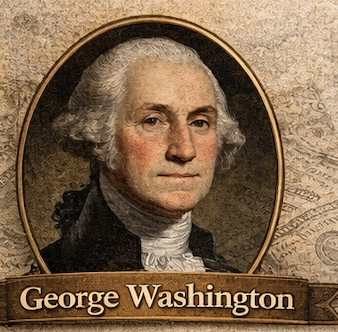
George Washington
George Washington
1732 – 1799
“Paper money has had the effect in your state that it will ever have, to ruin commerce, oppress the honest, and open the door to every species of fraud and injustice.”
Letter to Jabez Bowen, January 9, 1787
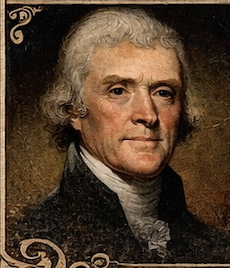
Thomas Jefferson
Thomas Jefferson
1743 – 1826
“I sincerely believe that banking establishments are more dangerous than standing armies.”
Letter to John Taylor, 1816
“The issuing power should be taken from the banks and restored to the people, to whom it properly belongs.”
Thomas Jefferson
“If the American people ever allow private banks to control the issue of their currency, first by inflation, then by deflation, the banks and corporations that will grow up around them will deprive the people of all property until their children wake up homeless on the continent their Fathers conquered.”
Letter to John Taylor, 1816
“Paper is poverty … it is only the ghost of money, and not money itself.”
Thomas Jefferson
“A private central bank issuing the public currency is a greater menace to the liberties of the people than a standing army. We must not let our rulers load us with perpetual debt.”
Attributed to Thomas Jefferson
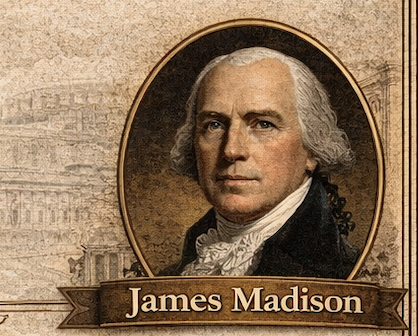
James Madison
James Madison
1751 – 1836
“History records that the money changers have used every form of abuse, intrigue, deceit, and violent means possible to maintain their control over governments.”
Attributed to James Madison
John Adams
John Adams
1735 – 1826
“All the perplexities, confusion, and distress in America arise, not from defects in the constitution or confederation, not from want of honor or virtue, so much as from downright ignorance of the nature of coin, credit, and circulation.”
Letter to Thomas Jefferson, 1787
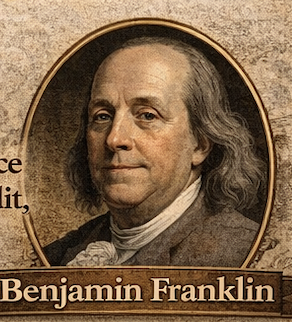
Benjamin Franklin
Benjamin Franklin
1706 – 1790
“An inflation of the currency is always attended with a loss to the laboring classes.”
Benjamin Franklin
Modern Voices · Friedrich A. Hayek (1984)
Friedrich A. Hayek Quote
“I don’t believe we shall ever have a good money again before we take the thing out of the hands of government — that is, we can’t take them violently out of the hands of government, all we can do is by some sly roundabout way introduce something that they can’t stop.”
Friedrich A. Hayek · Austrian-British Economist · 1984

Hayek, the Nobel Prize-winning economist and defender of classical liberalism, foresaw Bitcoin decades before Satoshi Nakamoto. The “sly roundabout way” he described — introducing something governments cannot stop — is exactly what Bitcoin became.

Henry Ford · New York Tribune, December 4, 1921
Henry Ford Energy Currency Article
Henry Ford 1921 Newspaper Article - Ford Would Replace Gold With Energy Currency
“The cause of all wars is gold … We shall demonstrate to the world two things: first, the practicability; second, the desirability of displacing gold as the basis of currency and substituting in its place the world’s imperishable natural wealth.”
Henry Ford · Headline: “Ford Would Replace Gold With Energy Currency and Stop Wars”

In 1921, Henry Ford proposed an “energy currency” — scarce, backed by energy, beyond the reach of bankers — that would displace gold and end the financial incentives for war. He envisioned something remarkably similar to Bitcoin: a digital, energy-backed, apolitical store of value.

The warnings were there. The vision was there. What was missing was the technology. In 2009, Satoshi Nakamoto delivered it. Bitcoin is not a new idea — it is the culmination of centuries of thinking about what honest money should be.